THE WICKED COOL GOODS BUYING GUIDE
Cordless Pressure Washer Buying Guide: What to Check
How to choose a cordless pressure washer: power, battery life, weight, accessories, and return policy to check before buying.
What to look for in the best cordless pressure washer
A cordless pressure washer trades some raw power for freedom. No outlet. No garden hose. You can clean wherever the mess is. But that trade only pays off if the tool you pick actually matches your jobs.
This page is a buying checklist, not a ranked shootout of competing models. We'll walk through the six things that matter most when shopping for a cordless pressure washer, using one featured product — WashUpGo — as the running example.
The six things to check before you buy:
- Pressure (PSI)
- Power source and battery runtime
- Weight
- Nozzles and accessories
- Included extras
- Return policy and warranty
Work through each one and you'll know quickly whether a given tool fits the cleaning you actually do — or whether you'd be better off with something else entirely.
Pressure (PSI): how much do you actually need
PSI, or pounds per square inch, is the main measure of cleaning force. Higher PSI means the water hits the surface harder, so heavier grime comes off faster.
WashUpGo is rated by the maker at up to 970 PSI. Note that this is the maker's spec, not an independently verified figure. The offer page positions it for cars, patios, furniture, bikes, and similar surfaces.
Here's the honest context: full-size gas and corded electric washers often run well above 1,000 PSI. On heavy, sustained jobs — large driveways, years of built-up grime — they still have an edge. Cordless units like WashUpGo give up some force in exchange for portability.
So match PSI to your task:
- Light dirt, touch-ups, rinsing a car: less force is fine.
- Patio furniture, decks, moderate grime: mid-range PSI works.
- Years of caked-on grime or large concrete areas: a full-size machine is the better tool.
Buying more PSI than you need wastes money and weight. Buying too little means the tool sits in a closet because it can't do the job.
Power source and battery runtime
A cordless unit runs on a rechargeable battery instead of drawing wall power. That's the entire point of going cordless — but it also means runtime is a real constraint the corded versions don't have.
WashUpGo's offer page does not state a battery runtime or a recharge time. If a typical cleaning session for you runs long, that's a gap worth closing before you buy. Check the current offer page details or contact the seller directly.
One flexibility point in WashUpGo's favor: the maker says it can draw water from any source using a compact intake tube — a bucket, a pool, a lake, even a bottle. That means you're not tethered to a tap either. Some people find that matters more than runtime for remote jobs, like cleaning gear at a trailhead or rinsing a boat at the dock.
Also consider whether you'd want a spare battery. If the runtime is short and the jobs are long, a second battery can bridge the gap — but only if the product supports it. Confirm before you buy.
Weight and how long you can hold it
Weight is easy to overlook in a spec list and impossible to ignore once you're twenty minutes into a cleaning session. A lighter unit is easier to hold one-handed for long stretches without arm fatigue.
WashUpGo is listed at 6.6 lbs — under 7 pounds, per the offer page. Compare that to a traditional gas or corded pressure washer, which is heavy enough that it usually needs wheels or a two-hand carry. Those machines often clean more, but you're not lifting them overhead to rinse a second-story window or carrying them down to a lake.
If you have mobility limits, or you plan to clean for a long stretch in one session, weight should carry real weight in your decision. A tool that's too heavy to hold is a tool that doesn't get used, no matter how powerful it is.
Nozzles, foam settings, and accessories
Swappable nozzles are what let one tool handle different surfaces safely:
- A narrow jet for stuck-on grime on hard surfaces.
- A wider fan spray for delicate surfaces like car paint or painted furniture, where a tight jet could cause damage.
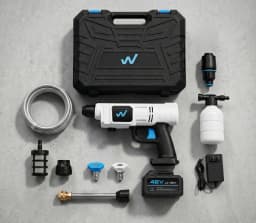
WashUpGo includes multiple swappable nozzles and a foam soap bottle, according to the offer page. The foam setting matters for cars and furniture in particular — a soapy pre-soak loosens dirt before you rinse, which some people find makes the whole job go faster.
When you're comparing options, check what's actually in the box versus what you'd have to buy separately. Accessories add up.
The general rule: more nozzle options means fewer surfaces you can't safely clean. A single-spray tool is a much narrower buy than a multi-nozzle kit.
Return policy and warranty
Before you buy any cordless washer, look for three things:
- A stated money-back window. WashUpGo's offer page lists a 30-day money-back guarantee.
- Who pays return shipping. WashUpGo's offer page does not spell this out. Treat it as an unknown until you confirm it — if you return it, you may be the one covering shipping costs, and that affects the real cost of trying the product.
- A warranty period. WashUpGo lists a 1-year warranty, which offers some protection after the return window closes.
A 30-day window gives you time to try the tool, but return terms still apply. Terms and promotions can change, so read the current offer page yourself before buying rather than relying on any summary, including this one.
Where WashUpGo fits this checklist
Running WashUpGo against the checklist above:
Where it scores well:
- Portability. Cordless, under 7 lbs, and able to draw water from a bucket, pool, lake, or bottle per the maker. No outlet or garden hose needed.
- Accessories. Multiple nozzles plus a foam soap bottle included, per the offer page.
- After-sale terms. A 30-day money-back guarantee and a 1-year warranty are stated, with return shipping costs unconfirmed.
Where it's a lesser fit:
- Sustained heavy cleaning. At 970 PSI (maker's spec), it's aimed at quick jobs — cars, patios, bikes, outdoor furniture — not hours of grime removal.
- Runtime clarity. The offer page doesn't state battery runtime or recharge time, which matters for longer sessions.
A full-size gas or corded washer is still the better tool for large driveways, years of accumulated grime, or all-day jobs. Think of WashUpGo as a portable option to weigh against your own checklist priorities — not a universal replacement for a full-size machine.
Bottom line
Start with the job you actually need to do, then match PSI, weight, and power source to it. That single step prevents most buyer's regret.
A cordless washer like WashUpGo suits quick, portable cleaning — rinse the car, spot-clean the patio, wash the bikes wherever they sit. A full-size unit still wins for heavy-duty work. Clear loose leaves and grit before you wash; our cordless leaf blower guide covers airflow, runtime, and noise.
Whatever you choose, confirm three things before you buy: the return window, who pays return shipping, and the warranty terms. For WashUpGo, the 30-day guarantee and 1-year warranty are stated, but return shipping costs and battery runtime are not — so ask.
This checklist is a starting point for your own decision, not a ranked verdict between named products. Use it, compare it against the current offer page, and buy only when the tool matches your jobs.
ALSO IN THESE GIFT LISTS
Sources and research scope
A buying checklist with one featured product, not a ranked comparison or hands-on test. Product facts come from the seller page and are labeled as maker claims.
- WashUpGo seller information · checked
Before ordering, record the exact model, what is included, and the delivered price with shipping, any subscription or replacement costs, and return postage. Read the return conditions for opened or used items and the deadline. A return window is not a guarantee of results or a cost-free trial, and a sale percentage is not evidence of value.