THE WICKED COOL GOODS BUYING GUIDE
Coccyx Cushion Buying Guide: What to Check
What to look for in a coccyx cushion, including Serenesitz's W-shaped design, materials, fit, and guarantee. A checklist, not a ranked comparison.
How to use this checklist
Shopping for the best coccyx cushion gets confusing fast. Every product promises pressure relief, and most of them start to sound the same after a few minutes of reading.
This checklist is a little different. It's built around one product, Serenesitz, rather than a ranked comparison against other named coccyx cushions. We haven't tested a lineup of cushions side by side here. Instead, we're using Serenesitz's publicly stated features as a way to walk through what actually matters when you're evaluating any tailbone cushion.
Use it to figure out which features fit your situation before you spend money. If a cushion you're considering doesn't cover the basics below, that's useful information regardless of which brand you end up buying.
One more thing up front: if you have a diagnosed tailbone or back condition, check with a doctor before choosing any cushion to manage pain. A cushion is a sitting aid, not a treatment plan.
Look for a shape designed to offload the tailbone
The single most important feature in a Serenesitz orthopedic seat cushion, or any coccyx cushion, is the shape. The whole point is to keep your tailbone from pressing directly against the seat.
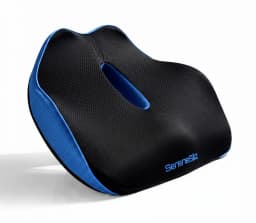
The most common way to do this is a cutout or contour at the back of the cushion. The Serenesitz offer page describes a W-shaped design that's meant to lift the tailbone so it isn't bearing direct pressure when you sit. According to the maker, the goal is to spread your weight across the hips and thighs instead of concentrating it on one pressure point.
That's sensible design logic, and it's the same thinking behind most contoured cushions. But be clear about what it is: this is the maker's description of design intent, not a verified clinical outcome. We have no independent testing to confirm how well the shape performs for any individual sitter.
When you shop, look for specifics. Does the cushion have an actual cutout or contour? Where is it positioned? A cushion that's just a flat pad with marketing language won't do the same job.
Check the foam density and how it holds up
Shape matters on day one. Foam determines whether that shape still exists on day 100.
The Serenesitz offer page describes high-density memory foam, and the maker says the foam is designed to resist going flat over time. This matters because a cushion that flattens quickly loses whatever pressure-relief shape it started with. A perfectly contoured cushion that compresses into a pancake after a few weeks is just an expensive seat pad.
Here's the honest caveat: no independent durability testing is referenced here. The "resists flattening" claim reflects the maker's description only, not a verified benchmark. Memory foam quality varies a lot between products at different prices, and there's no substitute for long-term use to find out.
What you can do as a buyer:
- Look for a stated foam density from the maker rather than vague "premium foam" language.
- Check whether the warranty covers flattening or deformation, not just manufacturing defects.
- Read real user feedback about how the cushion holds up after months of daily sitting, not just the first week.
A cushion that feels great in week one and bottoms out by month two isn't a bargain at any price.
Make sure it fits where you'll actually use it
A cushion only helps if it works in the chair you actually sit in. This is where a lot of buyers get tripped up.
Serenesitz is described on its offer page as a universal size, meant to fit office chairs, car seats, and sofas. That kind of flexibility is useful if you don't sit in one place all day. The offer page also mentions a non-slip base, which is designed to keep the cushion from sliding around on different surfaces.
Why this matters in practice:
- Office chairs usually have flat or slightly contoured seats, and most cushions sit fine on them.
- Car seats are angled and often sloped, which is where a non-slip base earns its keep. A cushion that slides forward every time you brake isn't doing its job.
- Sofas and armchairs have soft, uneven surfaces that can swallow a thin cushion entirely.
If you plan to move a cushion between a desk chair, your car, and travel, portability and a non-slip base matter more than if it'll live permanently in one chair. Also measure your primary seat. A "universal" size still needs to sit under you properly, with the cutout positioned at your tailbone, not halfway up your back.
Before buying, check what other buyers say about fit in the exact seat types you use. Serenesitz seat cushion reviews from people in your situation — commuters, desk workers, frequent flyers — are more relevant than general impressions.
Consider the cover: breathability and washability
The foam does the structural work. The cover handles comfort and hygiene.
The Serenesitz cover is described on the offer page as a breathable "4D airflow" material that's removable and machine washable. Breathability matters more than it might seem: memory foam traps heat, and a hot cushion is an uncomfortable cushion, especially on long drives or full workdays.
Easy cleaning matters if the cushion travels with you or sees daily use. Commuter cushions pick up car dirt. Office cushions collect spills. A cover you can pull off and throw in the machine is a real quality-of-life feature compared to spot-cleaning foam by hand.
One practical note: check any cushion's care instructions before washing. Removable and machine washable doesn't always mean hot water, high heat drying, or aggressive detergent cycles are fine. Follow the maker's guidance so you don't damage the fabric or zipper.
Compare the guarantee and warranty terms
Return terms tell you a lot about how much standing a company puts behind its product.
The Serenesitz offer page lists a 30-day money-back guarantee and a separate 1-year warranty. That's a two-layer structure: a short window to return it if it's not for you, and a longer window for product defects. Specific conditions aren't fully detailed in the text available, so confirm current terms directly before ordering — including who pays return shipping, whether the warranty requires proof of purchase, and what counts as a defect versus normal wear.
A stated return window is worth comparing across any cushion you're considering. So are these questions:
- Does the company pay return shipping, or do you?
- Is the refund full or partial?
- Does the warranty cover foam breakdown, or only defects?
Also note: a 30-day return window is a policy, not a promise of satisfaction. Return terms are a reason to compare sellers carefully — not a reason to assume trying it costs nothing, since return shipping and restocking details can shift the real cost.
If you're checking Serenesitz complaints or reviews elsewhere, weigh them alongside the maker's own guarantee terms rather than instead of them. A complaint about foam softening, for example, is more meaningful when you know whether the 1-year warranty would cover it.
Where Serenesitz fits this checklist
Serenesitz checks the boxes on this checklist: a tailbone-offloading W-shaped design, high-density memory foam the maker says resists flattening, a universal non-slip fit for chairs and car seats, a washable breathable cover, and a stated money-back guarantee plus warranty. It's sold direct through a GiddyUp partner offer page.
To be clear about what this is not: it isn't a claim that Serenesitz beats every other coccyx cushion on the market. It hasn't been tested against named competitors here, and we're not ranking it above or below anyone.
What we can say is that it covers the features a good coccyx cushion should have. That makes it a reasonable option to evaluate against this checklist, alongside anything else you're considering. If another cushion matches these features at a better price or with clearer warranty terms, that comparison is exactly what this checklist is for.
When to see a doctor instead of trying another cushion
A cushion is a comfort tool. It is not a diagnostic instrument or a treatment.
Ongoing, worsening, or severe tailbone or back pain is worth a medical evaluation rather than repeated cushion shopping. If you've bought two or three cushions and nothing helps, the problem may not be the cushions. A doctor can figure out what's actually going on and whether sitting posture is even the main factor.
A cushion may help with everyday sitting discomfort. But the relief claims on the Serenesitz offer page are the maker's own — they're not a medical diagnosis, a treatment, or a promise of results for you.
Get seen promptly if:
- Pain follows an injury, fall, or accident.
- Pain comes with numbness, weakness, or tingling in the legs.
- Pain is severe, worsening, or disrupts sleep and daily activity.
In those situations, see a doctor before continuing to self-manage with a cushion. For ordinary sitting discomfort, though, a well-designed cushion with an offloading shape, durable foam, a non-slip fit, and a washable cover is a sensible place to start — and this checklist will help you judge any option on its merits.
ALSO IN THESE GIFT LISTS
Sources and research scope
A buying checklist with one featured product, not a ranked comparison or hands-on test. Product facts come from the seller page and are labeled as maker claims.
- Serenesitz seller information · checked
Before ordering, record the exact model, what is included, and the delivered price with shipping, any subscription or replacement costs, and return postage. Read the return conditions for opened or used items and the deadline. A return window is not a guarantee of results or a cost-free trial, and a sale percentage is not evidence of value.